
Finding the right partner for your space can feel like a big decision. The selection process to find a dependable interior design company in Kuala Lumpur becomes challenging because multiple options exist for homeowners and business owners. The solution appears when you understand which elements to search for and which questions you should present.
The guide presents a complete step-by-step approach which explains every part of the selection process. The guide will teach you about designer roles while showing you how to prevent typical hiring errors, which will help you select the right candidate. The advice helps you discover experts who understand your creative vision, whether you want to refresh your house or transform your workplace completely.
What Does an Interior Designer Do?
An interior designer turns empty rooms into lovely, useful spaces. These professionals study how you use each area. Then they plan the layout, lighting, materials, and storage to fit your daily needs.
The team members perform their duties through the operation of technical systems, which maintain renovated spaces. A qualified designer must collaborate with electricians, carpenters and other team members to establish complete synchronisation between all system elements.
The team creates exact drawings which serve their purpose of purchasing materials while they track all construction activities until the project reaches its final stage. The system operates efficiently through its time-saving features, which protect users from making expensive mistakes.
Why You Need an Interior Design Company in Kuala Lumpur
Hiring a local firm changes how your renovation moves from start to finish. The right team saves time, money, and daily stress.
1. Saving Time
You speak to one team instead of chasing many workers. They manage everything from carpentry to electrical work. This single contact removes confusion and daily headaches.
2. Understanding Local Climate and Rules
Local designers know which materials resist humidity and mould. They also handle permits and safety rules. This knowledge stops legal trouble and costly rework later.
3. Accessing Better Materials and Trade Pricing
Firms buy materials at trade discounts you cannot get alone. They share these savings with you. Their supplier links also protect you from low-quality goods.
4. Avoiding Costly Mistakes Before Construction Starts
Designers catch errors like wrong wall placement using detailed drawings. Fixing mistakes on paper costs little. Fixing them after building costs thousands.
Key Things to Look for in an Interior Designer KL
Picking the right professional requires checking several important points. Here are the main qualities that separate great designers from average ones:
- Experience and portfolio variety – Look at their past work. A strong interior designer in KL shows projects across different space types. This proves they can adjust to various needs and styles.
- Clear communication style – The designer should explain ideas simply and listen to your input. They need to turn your wishes into real plans without using hard technical words.
- Project management skills – Ask how they handle timelines and budgets. A reliable designer gives regular updates, tracks daily progress, and solves issues quickly.
Beyond these points, check how they solve problems. A skilled designer offers creative fixes for tricky room shapes, odd pillars, or limited light. They also provide a clear contract that lists tasks, payment dates, and completion dates before work starts.
Popular Interior Design Styles in Malaysia
Studying successful local initiatives enables designers to identify which design approaches generate actual results. The following styles appear often in award-winning restaurants, cafes, and lounges across the country.
1. Japanese Minimalism with Warm Textures
The design approach includes straight lines with wooden elements and diffuse illumination from indirect light sources. The walls maintain their original appearance because they have no decorations. The furniture design features short and simple shapes, which create a low-profile appearance. The colour palette uses earth tones — browns, beiges, and soft greens. The room becomes adaptable through its sliding screen system, which works together with its open shelving units.
2. Industrial Chic with Raw Finishes
The open ducts, together with concrete floors and metal fixtures, create an industrial look that appears as a bold design style. Designers combine rough surfaces with comfortable seating and warm hanging lights to achieve equilibrium between their design elements. Brick accent walls create room character, but they do not occupy too much space in the room. The method proves effective when used to operate cafe businesses and lounge establishments. The industrial design style conceals damage effectively, which makes it perfect for areas with high foot traffic.
3. Modern Tropical with Natural Airflow
Large windows, together with ceiling fans and indoor plants, create a natural connection between interior spaces and the exterior environment. The design incorporates natural materials through rattan and bamboo and light wood surfaces, which create its distinctive style. Walls display soft green tones along with sandy beige colours. Open layouts enable air to flow freely, which reduces the need for extensive air conditioning systems. Many Malaysian homeowners choose this style to enjoy a resort-like feel at home.
4. Luxe Contemporary with Dramatic Lighting
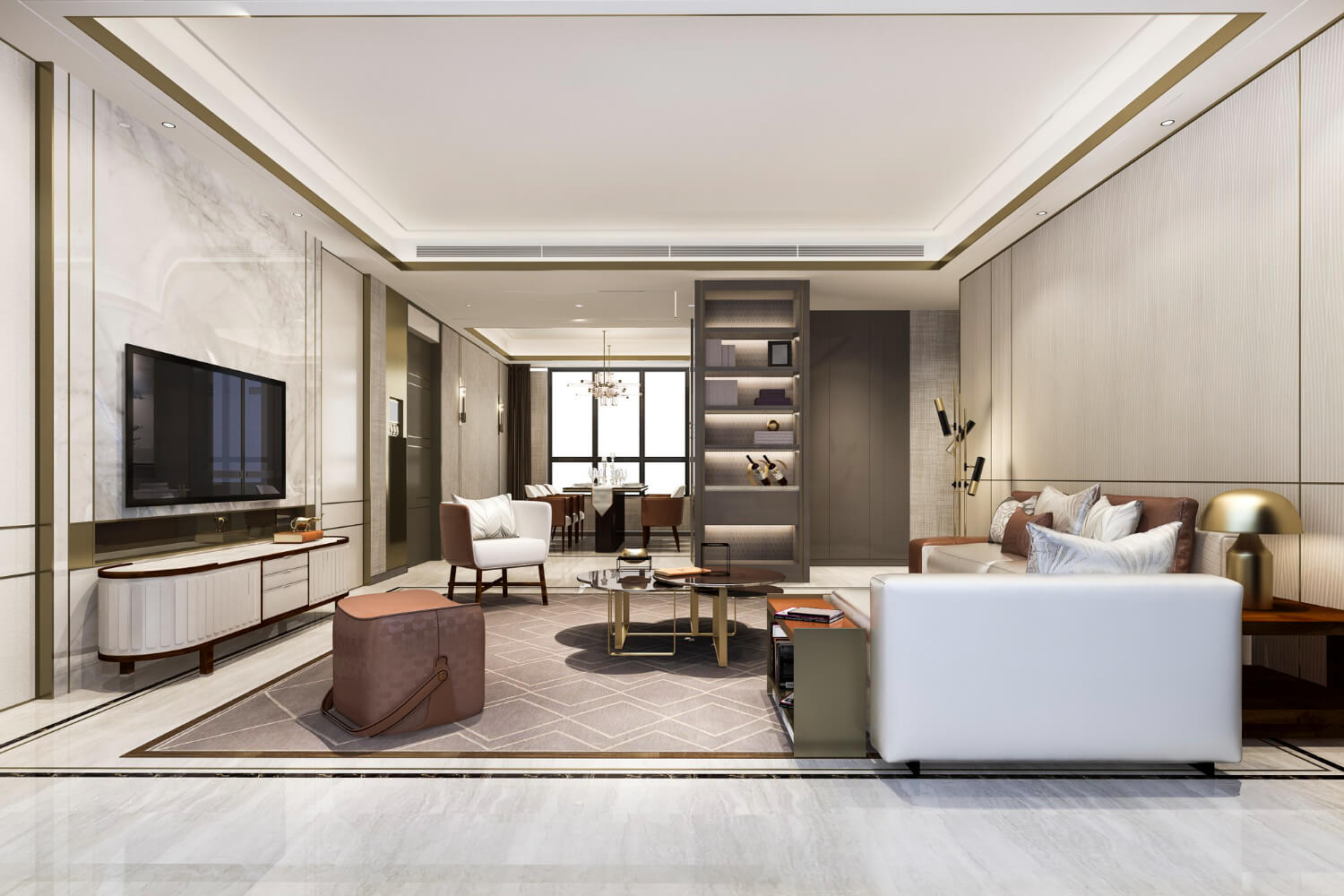
The space achieves a glamorous atmosphere through its big chandeliers, mirrored surfaces, and velvet seats, which create the ambience. The combination of dark accent walls with gold or brass fixtures creates an appearance of increased spatial dimensions. High-end lounges and exclusive restaurants use this design style to create their environments. Designers establish different lighting layers to create mood variations, which transform the space from its daytime appearance to its nighttime look. The result achieves a unique quality, but it avoids excessive sophistication.
Common Mistakes When Hiring an Interior Designer in Kuala Lumpur
Many people rush the choice and later regret it. Here are the errors to avoid when searching for an interior designer in Kuala Lumpur:
- Hiring based only on price – The lowest quote often hides poor materials or rushed work. Value comes from experience, quality finishes, and reliable service. It is not just about a small number on paper.
- Skipping the contract review – Some people sign without reading the fine print. A proper contract lists every task, material, and timeline. This keeps both sides protected.
- Ignoring communication style – If a designer seems hard to reach during early meetings, that pattern will continue during building. Pay attention to how quickly and clearly they respond.
Another mistake involves changing your mind too late. Big design shifts after building starts lead to delays and extra costs. Finalise your choices during planning. Then trust your designer to carry out the agreed vision.
Cost of Hiring an Interior Design Company in Kuala Lumpur
Interior design in Malaysia follows different pricing models based on the firm and project complexity. Most companies charge either a flat design fee, a percentage of the total renovation cost, or a rate based on floor area. Each model has its benefits.
Flat fees work well for smaller projects with clear limits. Percentage-based pricing lines up the designer’s interests with yours. Their payment grows only when the project value grows. Floor area rates give predictable costs for larger homes or offices.
Many designers offer a free first meeting to discuss your needs and give a rough estimate. During this meeting, ask what the fee covers. Some quotes cover only drawings. Others include site supervision, material sourcing, and final styling. Always get a detailed breakdown before signing.
Why Choose a Professional Interior Designer in KL
Working with a trained professional brings safety, durability, and peace of mind. Their skill protects your money from common problems.
1. Turning Awkward Room Shapes into Useful Areas
Designers add custom shelves to sloping walls. They place mirrors to widen tight passages. They turn wasted corners into reading nooks or extra storage spaces.
2. Keeping Your Project Safe and Up to Code
Professionals know socket distances and weight-bearing wall rules very well. They ensure every detail meets safety rules. Such diligence protects everyone who uses the finished space.
3. Protecting Your Investment with Durable Materials
Designers pick porcelain over ceramic for wet areas. They choose quartz over marble for busy kitchens. Better materials cost more upfront but save thousands in later repairs.
4. Handling Every Trade from Carpentry to Lighting
A master schedule puts electricians before plasterers. It puts painters before carpenters. This logical order stops rework. The designer checks every worker’s finished job.
5. Delivering a Finished Space That Truly Fits Your Life
Light switches sit where you naturally reach. Storage matches what you actually own. Designers learn your daily patterns before drawing a single line.
Why Choose ACP Design
For those seeking a dependable partner, ACP Design offers a full package of creativity and practical work. Their team operates through a complete ten-year span of experience, which includes home construction and business facility development from initial drawings to final inspection procedures. They listen carefully to your needs. The team will create detailed plans which match your life requirements together with your professional objectives.
This interior design company in Kuala Lumpur focuses on clear communication and open cost management. They track each task, give regular updates, and check every detail before finishing. Their portfolio includes homes, shops, offices, and restaurants. This portfolio proves they can adapt to different spaces. The team manages the full renovation process. You never feel lost or unsure.
Conclusion
The selection of your space partner requires you to evaluate their professional background, together with their ability to communicate and their skills in managing projects. Search for companies which actively listen to customers while presenting diverse work samples, and they should provide straightforward explanations about their operational procedures. Do not rush based on price alone. Users need to check every contract detail before they sign any document.
Start by listing your needs. Then interview at least three designers. The process requires you to verify their challenge-solving methods, their ability to estimate project duration and their system for managing project modifications. The correct match will provide you with absolute confidence and complete understanding through each step of the process.
Ready to change your space? Contact ACP Design today to book a free meeting. Our team of experts stands ready to transform your ideas into functional spaces which also possess aesthetic beauty.